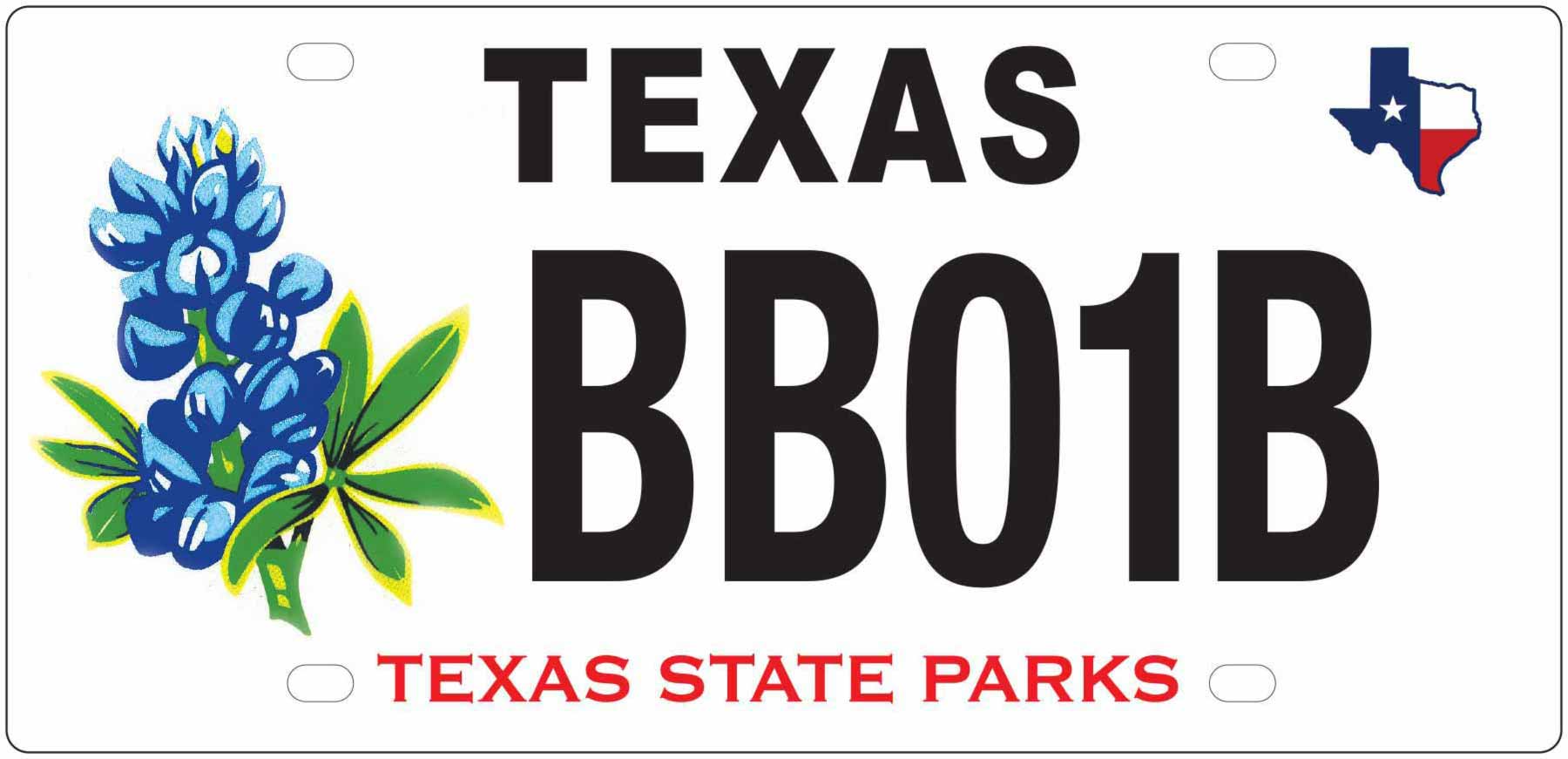
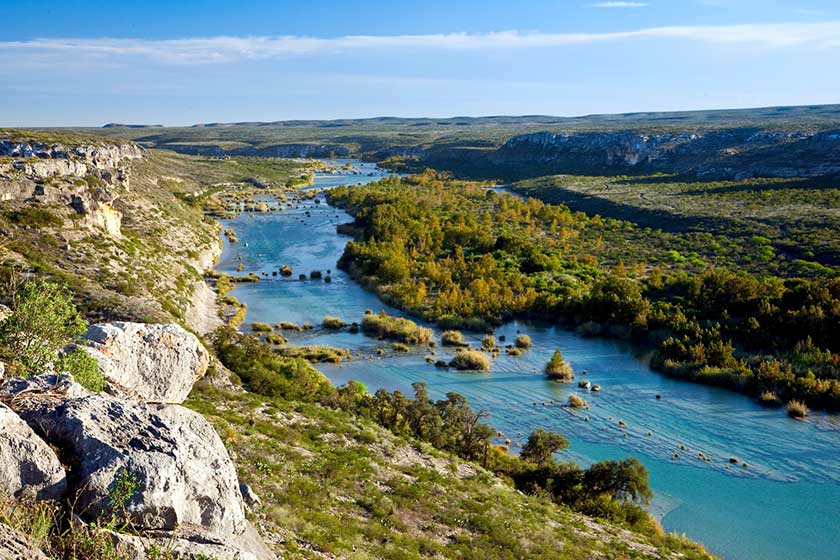
Show your support for state parks! Put a Bluebonnet plate on your vehicle, trailer or motorcycle and help preserve the unique beauty of more than 90 state parks across Texas. The bluebonnet is the state flower and symbolizes the natural beauty of Texas.
A primary function of state parks is to inform and educate park visitors about the natural and cultural resources located at these sites. Thanks to funding provided by Bluebonnet license plate sales, visitors to Franklin Mountains, Falcon, Atlanta and Goliad state parks will see new exhibits installed detailing subjects such as the geology and history of the sites. Big Bend Ranch and Kickapoo Caverns will have new roadside exhibits installed as these sites prepare to become fully operational parks. Visitors to Caprock Canyons State Park will be able to learn about the state bison herd, while Caddo Lake State Park will have a new exhibit that will travel to schools and other venues to teach citizens about the unique resources of this northeast Texas site.
Leading the effort to educate the public of the important contributions to Texas history made by military unit staffed by African-Americans known as Buffalo Soldiers, as well as black and Hispanic cowboys, native Americans and other minorities that have often been overlooked, the Buffalo Soldiers program brings history alive to thousands of park visitors and school children each year. Portraying historical figures, TPWD staff and volunteers show the roots of the multi-cultural society that make Texas unique.
State Parks are the repository of countless historic artifacts of Texas history. Bluebonnet plate funds will preserve artifacts found during recent investigations at the San Jacinto battleground. Locating and protecting archeological sites at Garner State Park will ensure that information about the park's prehistoric residents is gathered before it is lost forever. Other preservation projects include the conservation of original Civilian Conservation Corps planning documents and the historic Behrens cabin at Lyndon B. Johnson State Park and Historic Site.
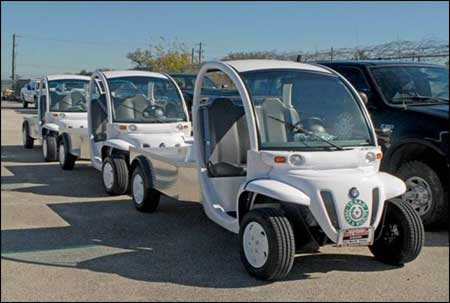
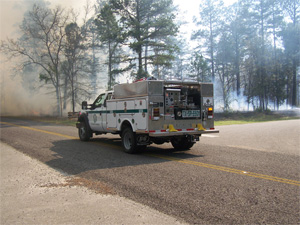
The use of fire is an important tool in maintaining the ecosystems in state parks. Safe and effective use of this tool requires the proper equipment for managing wildland fires and protecting employees working on fire lines. Bluebonnet license plate funds have been used to purchase a specialized fire engine to be used for wildfire suppression and implementation of prescribed fires on State Parks across the State.
The endangered Houston Toads of Bastrop State Park will also benefit from two projects funded by license plate sales. An intensive survey to identify the location of toad habitat will be conducted in order to safeguard these sites, and a large reforestation project that will plant thousands of trees on former agricultural land that has been recently added to the park will greatly aid this rare species.
A new Park Police vehicle, replacing one with over 150,000 miles on it, will be funded from Bluebonnet license plate receipts.
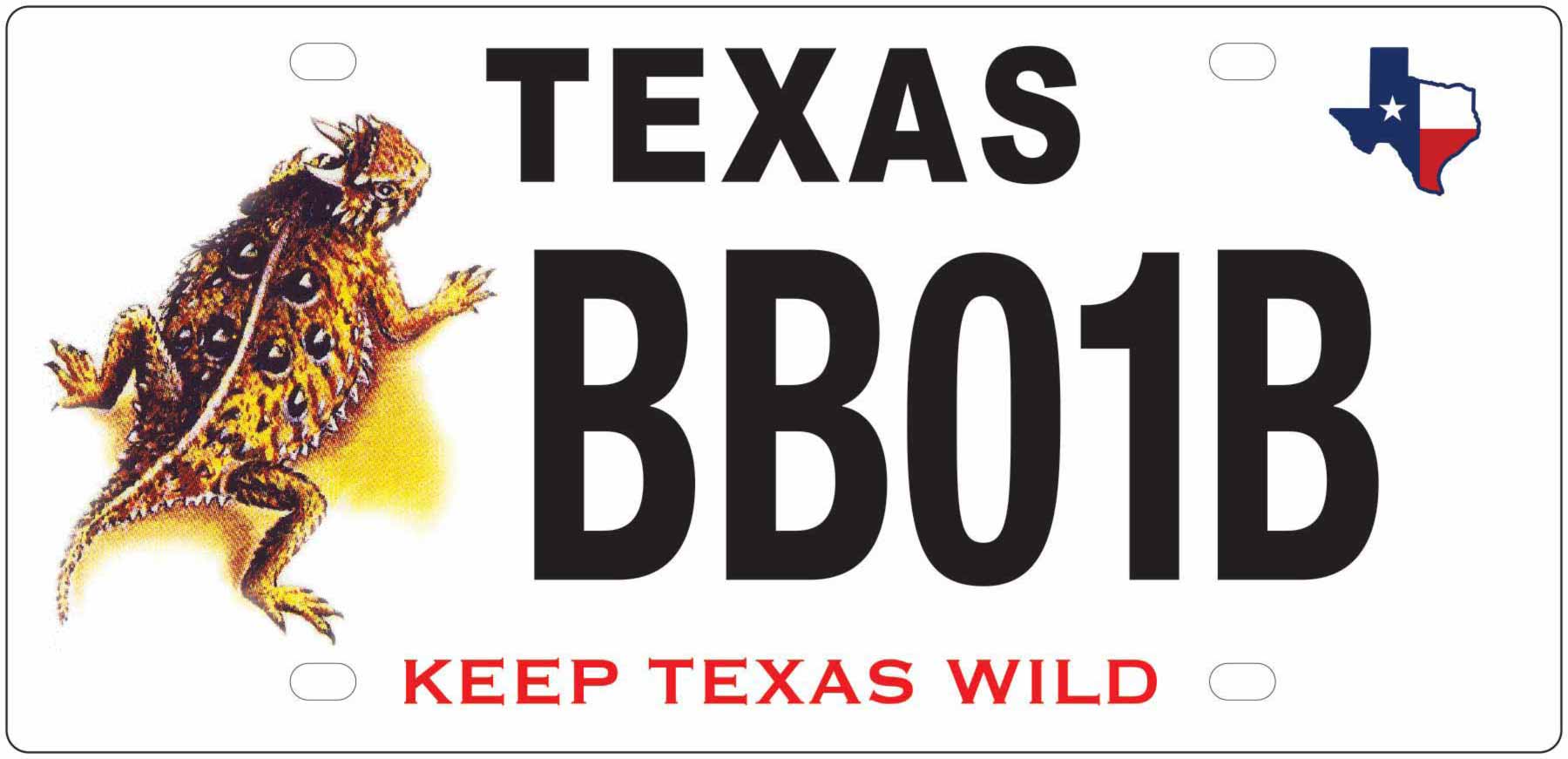
Show your support for wildlife! Put a Horned Lizard plate on your vehicle, trailer or motorcycle and help conserve wildlife diversity by funding a vast array of projects that help protect native species such as the state's official reptile, the Horned Lizard. All projects funded by this plate are used to implement the Texas Wildlife Action Plan.
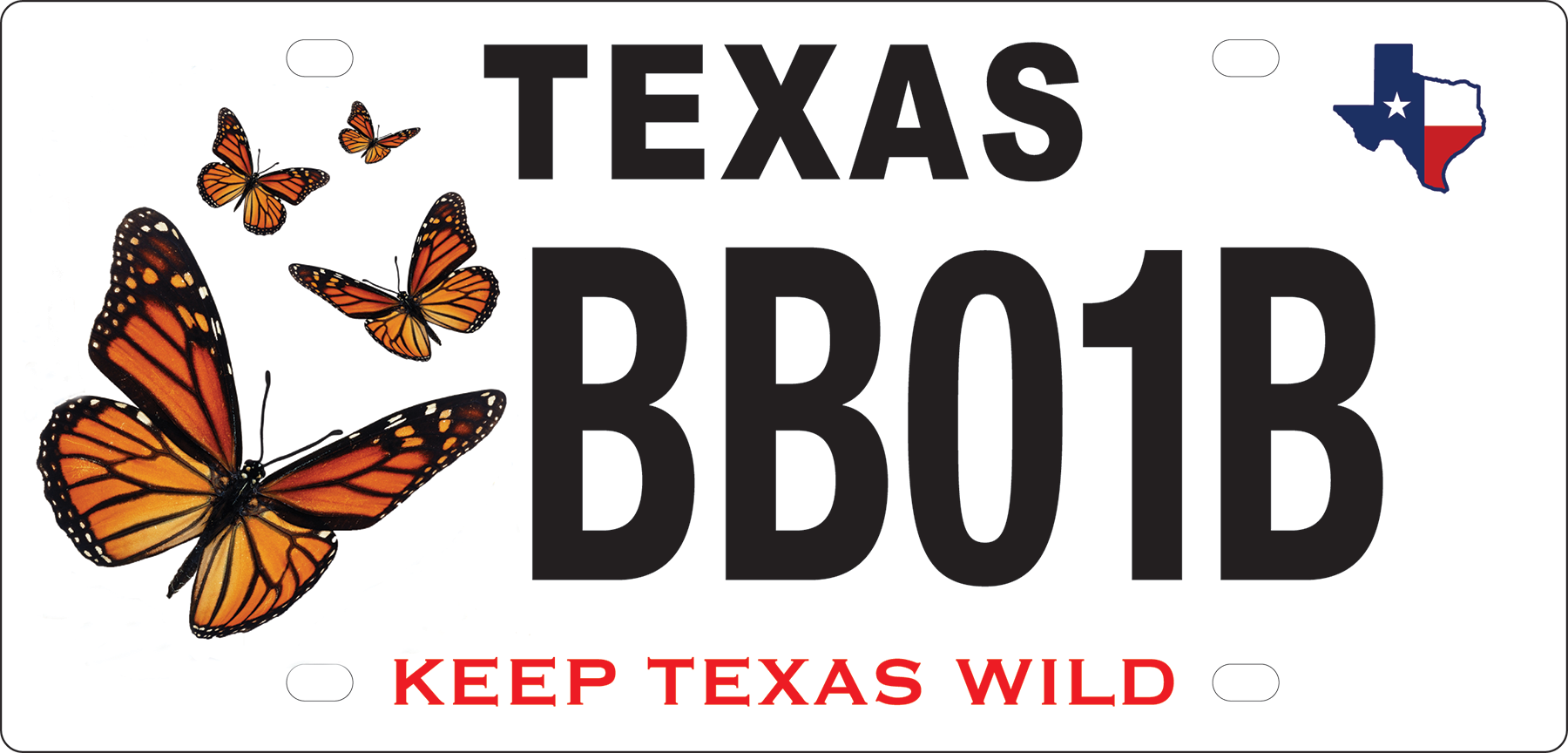
Invaders of Texas is a citizen scientist program to detect and report invasive species
Coordinating Organization: Lady Bird Johnson Wildflower Center at the University of Texas at Austin.
Partner Organizations: Texas Parks and Wildlife, Texas Forest Service, US Forest Service, US Fish and Wildlife Service and Houston Advanced Research Center.
The ecological and economic impacts of invasive species are becoming increasingly worrisome around the globe. Renowned biologist, E. O. Wilson, states, “On a global basis…the two great destroyers of biodiversity are, first, habitat destruction and second, invasion by exotic species.” The annual cost of invasive species to the U.S. economy is projected at over $130 billion. It has been estimated that nearly 42% of U.S. native threatened and endangered animals and plants are at risk due to invasive species. The Texas Wildlife Action Plan (TWAP) identifies invasive exotic species as a significant problem statewide, one that can “displace native species, threaten habitat integrity and can profoundly alter the landscape” (p. 18).
Invasive plant species for the most part do not provide significant sources of food or shelter for native wildlife and they displace the native plant species that do. Native wildlife species are generally interdependent with the native plant species that are part of their natural ecology, and disruption of this natural habitat by invasive plants threatens the survival of native wildlife species. For example, the Attwater Prairie Chicken National Wildlife Refuge in Texas is besieged by Chinese tallow and McCartney rose. These two invasive species combined shade out native grasses that the prairie chicken needs for survival (Silent Invasion: A Call to Action, National Wildlife Refuge Association. October 2002, p.16). Salt cedar is another invasive exotic plant that has had a tremendous negative impact on wildlife in riparian habitats in Texas and the southwest. Both the diversity and the numbers of birds are greatly reduced in stands of salt cedar as compared to those seen in native stands of cottonwood and willow. Every invasive plant species creates its own problems and Texas habitats and wildlife are increasingly suffering as a result. The Invaders of Texas Program was developed to address this conservation need.
The Invaders of Texas Program is an innovative campaign whereby volunteer "citizen scientists" are trained using a specially developed kit to detect and report invasive species throughout Texas. That information is validated and delivered into a statewide database and to agency partners who can take action. The program dramatically and systematically increases early detection, reporting and monitoring of invasive species in critical wildlife habitats in Texas, reducing damage to the native landscape and helping to preserve threatened and endangered species.
The project supports the creation and perpetuation of a statewide network of citizen scientist teams who seek out and report outbreaks of selected harmful invasive species in their local areas. These teams are organized geographically into regional satellite groups connected to local resource managers who coordinate appropriate responses to control the spread of unwanted invaders. In 2006 and 2007, the program was introduced in twelve unique areas in Texas. We propose to expand it in 2008 and 2009 by training four new teams, focusing on the three ecoregions identified as having the highest priority in the Texas Comprehensive Wildlife Strategy: The Blackland Prairie (Tier I), the Gulf Coast Prairies and Marshes (Tier II), the High Plains (Tier I) and the Edward’s Plateau (Tier II).
This program empowers the public to control the spread of invasive species by identifying and mapping invasive species distributions. It increases interest, understanding, and participation in the scientific efforts that help reduce the profound economic and ecological impacts of invasive species. In many cases, citizen scientists fill a gap for partnering agencies and organizations who otherwise would not be able to carry out these projects due to lack of staff and/or funding. The end result will be a model citizen science program that other states, agencies, or organizations can easily implement.
Project partner: The Nature Conservancy of Texas
Project Statement Objective(s):
The prescribed fire capacity for the Refugio-Goliad Prairie (RGP) was significantly increased in 2003-2004 by the establishment of the RGP Prescribed Fire Module in Victoria. Full-time staff were hired and qualified by the National Wildfire Coordinating Group and nine training courses were completed by the RGP Fire Staff that year. An office and shop were purchased in Victoria and the necessary capital items secured to effectively implement a large prescribed fire program. Grant money was used to purchase the required personal protective equipment for eight firefighters and to outfit the RGP Fire Engine. They now have one Type 6 Fire Engine and four ATV's available for fire implementation and a tractor with implements available for fire line preparation. The module has assisted in all aspects of prescribed fire application including planning, preparations, monitoring and implementation. The RGP Fire Module implemented 39 prescribed burns for a total of 16,204 acres within the RGP Project Area from August 2003-August 2004. In addition, the RGP Fire module assisted with an additional 19 prescribed fire and wildfire operations totaling 17,371 acres with our partnering agencies in the same time period.
In association with the Coastal Prairie Conservation Initiative (CPCI), a botanical survey of ten ranches within the Refugio-Goliad Prairie area was conducted from October 2003 through June 2004. CPCI is a partnership between private landowners, Grazing Lands Conservation Initiative, Texas Parks and Wildlife Department, Natural Resources Conservation Service, U.S. Fish and Wildlife Service, and The Nature Conservancy of Texas; it is designed to provide financial, technical, and regulatory assistance to private landowners interested in management of native coastal prairie habitats. This botanical survey was only one small aspect of GLCI's much larger, more sustained effort at coastal prairie restoration and, at some point in the future, reintroduction of Attwater's prairie chicken (Tympanuchus cupido attwateri) to this part of its former natural range.
The principal focus of this botanical effort was a field survey for populations of any of a suite of 26 globally rare plant taxa. A second focus was the creation of plant lists for the participating ranches and for the Refugio-Goliad Prairie area as a whole. A third focus was the compilation of a set of digital images of most of the plant taxa encountered in the region.
Several obstacles prevented the initial goal of securing formal permission from at least 3 private landowners with suitable habitat in the Refugio-Goliad Prairie area to release captive reared Attwater's prairie chickens on their property. A region-wide Safe Harbor agreement has been submitted to the regional USFWS office by a USFWS biologist; however it has not been approved for federal review at this point.
This facility will help to increase production and survivability of captive-born Attwater's Prairie Chickens to enhance species recovery efforts.
Project Coordinator: Houston Zoo, Inc
Coordinating and Partner Organizations: Houston Zoo, US Fish and Wildlife Service, The Nature Conservancy of Texas, NASA's Johnson Space Center, Coastal Prairie Conservation Initiative, Abilene Zoo, Caldwell Zoo, Fossil Rim Wildlife Center, San Antonio Zoo, Sea World - San Antonio, Texas A&M University.
With less than 50 individuals estimated in the wild in 2007, Attwater's Prairie Chicken (Tympanuchus cupido attwateri) is one of the most critically endangered birds in Texas, as well as in all of North America. It is also a flagship species for the protection of intact habitat in the Gulf Coast Prairie and Marshes Ecoregion, one of three Tier I - High Priority Ecoregions in the state of Texas. Because the wild population of Attwater's prairie chicken is not sustainable at this time, captive propagation and reintroduction efforts remain the "lifeline" for this imperiled grouse.
The Attwater’s Prairie Chicken Recovery Plan, prepared by the US Fish and Wildlife Service, sets tangible goals for increasing the following:
Depending on the rates of success in meeting these various goals, the USFWS estimates that the down-listing and eventual de-listing of Attwater’s prairie chicken could require anywhere from five to 50 years.
In an effort to approach the lower of these estimates, the Houston Zoo proposes to: 1) significantly increase the level of chick production at its facility by doubling the size of its current breeding facility and the number of breeding pairs; 2) improve current levels of chick survivability by conducting nutritional studies and refining captive diets; and 3) increase the level of veterinary support provided to wild and captive populations, this in collaboration with federal agencies, non-governmental conservation organizations, and private landowners.
As an adjunct to the conservation efforts covered in this proposal, the Houston Zoo also conducts ongoing educational programs focused on the ecology of the Gulf Coast Prairie and Marshes Ecoregion, and serves as a venue for generating greater public awareness regarding species and habitat conservation in the state of Texas.
This project is being undertaken to ensure an annual supply of captive-bred chicks for the Attwater Prairie Chicken Recovery Program at a production level that will support reintroduction efforts at three or more sites. For the past decade, captive breeding has supported reintroduction efforts at two sites: 1) the Attwater Prairie Chicken National Wildlife Refuge in Colorado County; and 2) the Texas City Prairie Preserve in Galveston County. The combined areas and carrying capacities of those two sites, however, are well below the target area and wild population size that are proposed in the Attwater’s Prairie Chicken Recovery Plan.
In 2007, for the first time in the recovery program’s history, captive-bred birds were also released on privately-held lands in Goliad County. This represents the first real step toward building the wild population and increasing the extent of suitable protected habitat for this species. According to the Recovery Plan, multiple areas of more than 25,000 acres and a wild population of 6,000 birds are required for de-listing Attwater’s prairie chicken. With only two established refuges totaling just over 10,300 acres and an unsustainable wild population of only 50 birds, there is no way of reaching these objectives in any meaningful time frame without adding new reintroduction sites and producing significantly more releasable birds each year.
In terms of captive propagation and reintroduction, the Recovery Plan calls for: 1) a minimum of 200 birds (100 breeding pairs) in the captive flock; 2) 100 birds per release at established release sites; 3) an increase in the captive survival rate – from fertile egg to eight weeks of age - to at least 50%; and 4) pilot releases of no fewer than 30 birds on new private lands after quotas for established reintroduction sites have been met. In a major step toward achieving these goals, the Houston Zoo plans to double the size of its existing captive facility and breeding flock, and to increase the annual production of releasable birds by at least a factor of two.
The proposed project has several specific objectives related to the captive breeding of Attwater's prairie chickens and their reintroduction to Gulf Coast prairie habitat. These objectives include:
The project will commence in early 2008 and will be completed by July 2009. One additional keeper will be hired by the Houston Zoo’s Bird Department to help manage the larger number of breeding pairs and the increased chick production, and new equipment will be required for handling the anticipated increase in the number of chicks produced.
A doubling of the current level of chick production by the Houston Zoo, without any increase in production by the six other captive breeding programs for this species, would ensure sufficient captive stock to sustain reintroduction efforts at the three existing release sites and could conceivably provide sufficient captive stock (> 30 birds) to consider releases at a fourth site.
Changes in the Vitamin A and Vitamin E levels of captive diets in recent years (2005-2007) have led to noticeably better health and increased levels of survivability in captive-reared birds. However, blood levels of Vitamin E are still well below those seen in wild prairie chickens. A new diet for captive breeding birds will be tested, one that adds an anti-oxidant to established Vitamin A and Vitamin E levels. It is hoped that this diet will continue to increase survivability and net production. Successful results obtained at the Houston Zoo would then have a multiplier effect, since the diet would be employed by all institutions that participate in the captive breeding program.
This program will help to develop Tallgrass Prairie Conservation Easements
Coordinating Organization: Native Prairies Association of Texas (NPAT)
This project will permanently protect approximately 100 acres of native tallgrass prairie and adjacent restorable land within the Blackland Prairies and Cross Timbers and Prairies ecoregions via a combination of donation and bargain sale of conservation easements.
“I can sit on the porch before my door and see miles of the most beautiful prairie interwoven with groves of timber, surpassing, in my mind, the beauties of the sea. Think of seeing a tract of land on a slight include covered with flowers and rich meadow grass for 12 to 20 miles…” – John Brooke, an early settler in Grayson County, Texas, 1849.
Owing in large part to the tallgrass prairie's rich agricultural soils, more than 99 percent of this ecosystem has been destroyed or fundamentally altered, making the tallgrass prairie the most-endangered large ecosystem in North America. It is estimated that losses are even greater in Texas’ tallgrass prairie regions: the Blackland Prairies, Gulf Coast Prairies and Marshes, and the Cross Timbers and Prairies. These regions are high priority regions in the Texas Wildlife Action Plan and the State Land and Water Conservation Plan.
Most of the tallgrass prairies were destroyed or altered by plowing for row crop agriculture, poor livestock grazing management, and urban sprawl. The destruction of most of Texas’ tallgrass prairie, followed by changing agricultural practices (such as planting of non-native forage grasses), has led to a significant loss of habitat for native wildlife such as grassland birds and the native plant communities these species depend upon. High human population growth in cities around these regions is jeopardizing the remaining native prairies and the wildlife that resides within and depends upon them.
For example, all four major native Blackland Prairie plant communities are rare and most tallgrass prairie plant communities have conservation rankings of G1 (Critically Imperiled) or G2 (Imperiled).
In addition to preserving native tallgrass plant communities and their associated floristic diversity, prairie conservation benefits a wide range of wildlife species including grassland birds, upland game birds, and small mammals such as the Gulf Coast hog-nosed and eastern spotted skunks.
The Blackland Prairie region is important stopover habitat for migrant songbirds and wintering raptors and many of these species are declining. According to Partners in Flight, population censuses between 1966 and 2003 have shown large decreases in grassland bird populations: Eastern Meadowlark declined 66%, Northern Bobwhite declined 67.6%, Field Sparrow declined 68.8%, Short-eared Owl declined 69%, Loggerhead Shrike declined 77.1%, Grasshopper Sparrow declined 77.1%, and the Houston subspecies of Henslow's Sparrow became extinct. Additional species undergoing long-term declines or high threats include Swainson's Hawk, Short-eared Owl, Painted Bunting, Sprague's Pipit, LeConte's Sparrow, Dickcissel, and Bell's Vireo.
However, unaltered tallgrass prairie remnants remain scattered throughout these regions. Due to the scarcity of intact prairie habitat and continuing losses to plowing, poor livestock grazing management, planting of non-native grasses, and urban development, the protection of these remaining prairie remnants is critical. These remnants could be protected by conservation easements, serve as local ecotype seed sources for habitat restoration, provide educational opportunities and examples for wildlife habitat restoration, and become focal points for development of wildlife management associations and inspire others to protect and restore tallgrass prairie.
This project will permanently protect approximately 100 acres of native tallgrass prairie and adjacent restorable land within the Blackland Prairies and Cross Timbers and Prairies ecoregions via a combination of donation and bargain sale of conservation easements. Conservation easements are similar to donation or sale of development rights and permanently protect the prairie by working with willing landowners who wish to protect their prairies.
Project Coordinator:Trinity Basin Conservation Foundation
The goal of the Trinity Basin Conservation Foundation’s (TBCF) Blackland Prairie Habitat Restoration Project is to assist private landowners with native grassland restoration projects within the Blackland Prairie region of the Trinity River Basin. In order to deliver native grassland restoration in a fashion that will positively affect declining grassland species as a whole, the TBCF realizes that habitat restoration efforts must focus on areas that present the best opportunities for large scale habitat restoration. Therefore, the TBCF has teamed up with the Western Navarro Bobwhite Restoration Initiative (WNBRI) in an effort to restore, and/or improve over 40,000 acres of Blackland Prairie habitat in the western portion of Navarro County.
The WNBRI is a landowner cooperative approach to native grassland restoration and management in the western portion of Navarro County, which is in the heart of the Texas Blackland Prairie (Teir 1 Conservation Priority Ecoregion). The primary focus of the WNBRI is to restore, improve, or maintain healthy native grassland communities in a more or less homogenous fashion over approximately 40,000 acres within the western 1/3 of Navarro County. Healthy and productive native grasslands will serve as the habitat foundation to support sustainable populations of resident and migratory grassland bird species identified in the Texas Wildlife Action Plan, particularly Northern bobwhite.
Through funding from the Texas Wildlife Diversity Grant the TBCF will purchase essential equipment (no-till seed drill, prescribed burning equipment, and herbicide) for the WNBRI that will be provided to its members for native grassland restoration projects and continuing management. The money received from this grant will greatly enhance the WNBRI’s ability to restore a significant amount of native grassland habitat within the Blackland Prairie region and facilitate its management well into the future.
In the last two decades increasing commercial utilization of wildlife resources has revised the scope of stewardship for our non-game animals. No longer are only the traditional "game" animals and fisheries in need of management, but increasingly, reptiles and amphibians represent an enormous and growing international trade for commercial products. No group has shown the impacts of these activities more dramatically than the turtles. The commercial trade in freshwater turtle species has been implicated in decreased abundance and even with extirpation of turtle species across the Asian subcontinent. Driven by increasing demand, Texas turtles have become part of the global market. Studies examining the harvest of some turtle species in the USA have shown that commercial use can be sustainable, but other researchers have also found this may be species dependent. In keeping with its mission and responsibilities to manage wildlife resources in Texas sustainably, TPWD increased the oversight and regulation for Texas turtles in 2007. Nearly all species of freshwater turtles are now illegal to harvest commercially. Some species were considered as potentially able to sustain commercial harvest without long term impacts. However, like our other fisheries we must collected data and evaluate the impact of harvest in order to test this assumption.
A remarkable consortium of Texas institutions have come together collaborating on a project to achieve just that. Researchers at Texas State University will coordinate a project that brings the expertise held among scientists across the state to bear on this problem. This is one of the first projects involving not just multiple collaborators, but experts from two of our Zoological parks (Ft. Worth Zoo and Houston Zoo, Inc.), four University Systems (Texas State University, Texas A&M, Sul Ross State University and the University of Texas), and multiple schools within those systems (San Marcos, College Station, Alpine, Del Rio, Arlington, El Paso and Tyler), and multiple researchers within each. In a long term monitoring project, this team will seek to document the current state of the "fishery" made up by Texas freshwater turtles and then evaluate the potential impacts of harvest. The results will help to guide management decisions for the taxa currently allowed commercial harvest in Texas. Texas has a remarkable diversity of turtle species some of which occur only here (Graptemys caglei image), others have a significant portion of their range here (Pseudemys gorzugi image), and some occupy more significant portions of the state (smooth softshell image). The study will directly support the research of graduate students (Image of Jake Jackson), allow more students to become involved in wildlife research at each of the collaborating institutions, and further the educational, research, and service to community efforts of each of the partners.
Project Coordinator: Texas Christian University, Department of Biology
The Texas horned lizard (Phrynosoma cornutum) is a federal species of concern and a threatened species within the state of Texas. This charismatic species has been declining throughout much of its range, including a virtual disappearance from eastern and central Texas. The causes of the decline are complex, but most likely include habitat loss to agriculture and development, introduction of the red imported fire ant (Solenopsis invicta), and use of insecticides. In order to protect and conserve the Texas horned lizard for future generations, we need to improve our understanding of the biological characteristics of this species, reduce the negative impacts from known and potential threats, and design and implement sound management and restoration strategies. If the potential threats can be eliminated or mitigated in areas where the Texas horned lizard has been extirpated or is declining, then reintroduction programs would promote the conservation of the species.
An understanding of dispersal patterns, population structure, and levels of genetic diversity are critical for the conservation of Texas horned lizards; however, we know virtually nothing about these aspects of horned lizard biology. Genetic data can be used to estimate these important parameters and guide population management and restoration efforts. For example, a loss of genetic diversity in populations is predicted to increase extinction risk through inbreeding depression and by reducing a population’s ability to track changing environmental conditions. By identifying populations with low genetic diversity, we will be able to aid their recovery. Assessing the geographic extent of dispersal among populations will reveal the scale at which reintroduction and population augmentation efforts need to be conducted. If populations are highly connected by dispersal, then it is unlikely that reintroduction efforts would need to be overly concerned about mixing lizards from different geographic areas. If, however, populations are genetically distinct, then reintroduction efforts would need to reflect the lizards’ natural population structure and only reintroduce individuals to their populations of origin to avoid genetic contamination of populations that may be locally adapted. Populations identified as having low genetic diversity would not be used in restoration efforts and would instead be candidates for augmentation from closely related populations.
In this study, we will develop genetic markers for the Texas horned lizard from captive lizards currently housed at the Fort Worth Zoo. In collaboration with individuals from TPWD, Texas State Parks, and the Fort Worth Zoo, we will determine the genetic makeup of wild lizards from across the state and those currently kept in captivity in order to address the conservation genetics of this species. These data will be one of the first steps in a broad-scale restoration project with the long-term goal of restoring Texas horned lizards to suitable habitats in the state of Texas.
The Rare Plants of Texas is a reference work containing over 225 listed, candidate, or species of concern Texas plants, complete with photographs, line drawings, county-level maps, and text on the distribution, habitat, physical description, flowering times, federal/state status, similar species, selected references, and other items of interest. The book also includes introductory chapters on an ecological overview of the state, the history of plant conservation in Texas (including federal, state, and NGO ranking methods), threats, recovery methods, and how to report new information on rare plants. Many of these species are too rare to have been mentioned, much less pictured in other field guides. With the publication of this guide, more people now have the capacity to know what these plants and their habitats look like.
In order conserve and recover these rare species, more information is needed. Without an easy way to identify these plants, information received is often incorrect. The intended audience for this book includes agency personnel, non-governmental entities, environmental consultants, natural resource professionals, naturalists, academics, and anyone who needs to know about the listed, candidate, or species of concern plants of Texas. Hopefully the information contained in this work will stimulate further interest, research, conservation, and appreciation of these special elements of our wild heritage.
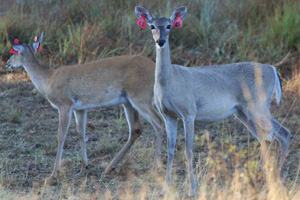
Show off your rack! Put a White-tailed Deer plate on your vehicle, trailer or motorcycle and help fund wildlife management and research.
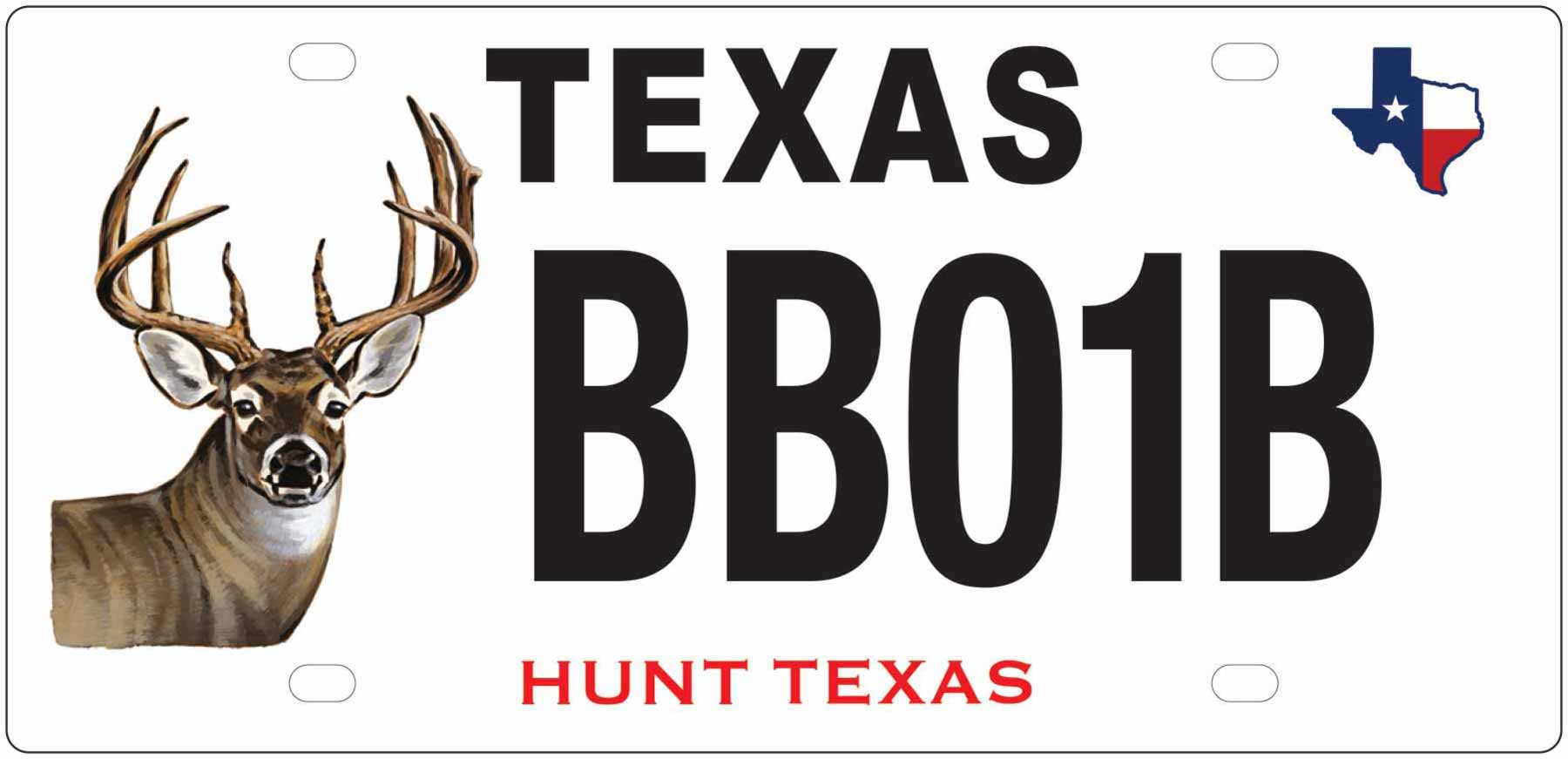
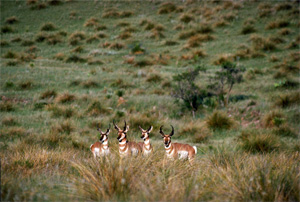
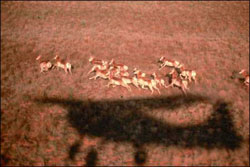
This program improves science and the consistency of aerial pronghorn surveys in the Panhandle.
Annual State pronghorn surveys are conducted in the Panhandle by fixed-wing aircraft in the months of June and July. The pronghorn habitat in the Panhandle is separated into 46 herd units that comprise more than 8.2 million acres. The District 2 staff is annually surveying approximately 24% of the total herd unit acreage.
Because flight hours are limited, field staff surveys only portions of most, but not all, herd units annually. Due to the vast expanse of pronghorn range in the Panhandle and limited flight hours, survey methodology is inconsistent with other regions (Trans Pecos and western Edwards Plateau/Permian Basin). Survey methodology in other regions involves complete counts of most herd units annually, while rotationally surveying a minority of herd units (alternate-year or third-year rotation) that are less critical (i.e., very low pronghorn numbers or low permit issuance rate). In the Panhandle, survey methodology incorporates the use of permanent survey “blocks” established in the 1970s or after that generally comprise a minority of each herd unit (sometimes as little as 10-15% of the herd unit). These traditional survey blocks are intended to serve as a trend or index for the remainder of the herd unit. Occasionally, the survey block is similar to the remainder of the herd unit, but in most herd units the survey block is very different and often encompasses superior habitat than that existing in the remainder of the herd unit. As a result, pronghorn numbers and trends often are not representative of numbers/trends in the herd unit as a whole.
Ideally, survey of all or almost all herd units annually, as is done in the other 2 regions, would provide superior data for population estimates and permit issuance. Given limited funds and time, this is not possible. The next best approach involves surveying approximately 50% of herd units on a rotational basis, such that all herd units are surveyed every 2 years. Herd unit population estimates during non-survey years would be based upon previous year survey results, combined with the current-year trend in adjacent or nearby herd units that demonstrate similar population trends.
Funding from license plate sales will allow us to initiate the process of converting survey methodology in the Panhandle to complete survey of herd units on a rotational basis. Complete herd unit coverage (vs. partial coverage) will improve the science behind estimates of pronghorn populations and permit issuance. Furthermore, this methodology better satisfies the TPWD charge of implementing consistency in survey techniques among regions.
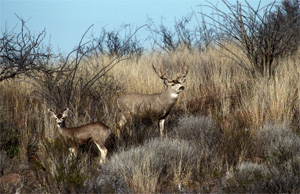
This program improves knowledge of mule deer distribution/density through increased aerial survey efforts.
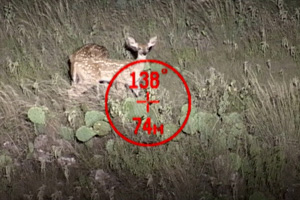
For the past 3 decades, Texas Parks & Wildlife Department (TPWD) annually conducted mule deer surveys with fixed-wing aircraft, as well as night-time spotlight surveys. In 2006 TPWD began conducting aerial mule deer surveys by helicopter to improve estimates of deer numbers and herd composition. In January and February each year, random transects of varied lengths are flown in monitoring units of High, Medium, and Low deer density. Total mule deer range comprises 24.3 million acres in the Trans Pecos and 13.7 million acres in the Panhandle. Survey transects in 2007 constituted less than 1% (0.54%) of the total mule deer range. Wide confidence intervals of monitoring unit estimates (± 54% for Low; ± 41% for Moderate; ± 23% for High) were largely a result of low sample size, diversity of deer habitat and distribution, and improper herd unit delineation (because of incomplete knowledge of deer populations). However, confidence in estimates can be greatly increased with improved delineation of monitoring unit boundaries (by decreasing variability among transects). This process was initiated in the Trans Pecos in 2006 and initiated in the Panhandle in 2007. An increased number of transects during 2007-08 surveys can help to improve knowledge of deer distribution and density, and ultimately improve monitoring unit delineation.
Additionally, a buck-only mule deer season was proposed in Sherman, Hansford, Gaines, Martin, and eastern Andrews counties for the 2008-09 season. Deer numbers are generally low in these counties, and survey data is limited. The hunting season proposal is based upon occasional deer sightings, landowner reports, general knowledge of deer presence, and limited survey data. Current-year aerial survey transects in these counties will help to quantify general knowledge and assumptions, as well as provide some baseline information on deer numbers and herd composition prior to potential establishment of a hunting season.
Aerial survey efforts in 2008 were increased by 12-13% (10 additional random transects in Trans-Pecos monitoring units and 5 additional transects in the Panhandle) to help improve delineation of monitoring unit boundaries. Monitoring unit boundaries are being revised as a direct result of the new information obtained during January 2008 surveys.
Aerial survey transects conducted in Sherman and Hansford counties (3 transects) and in Gaines, eastern Andrews, and Martin counties (6 transects) improved knowledge and data (deer density and buck:doe ratios) in support of mule deer seasons proposed for the 2008-09 hunting season, and provided valuable baseline information for these previously unhunted counties.
This study evaluates pronghorn management units using genetic techniques.
Current pronghorn management (herd) units were developed by TPWD during the 1970s and are the basis for annual fixed-wing surveys and pronghorn permit issuance. Herd unit boundaries were selected based upon perceived barriers to herd movements, such as interstate highways, mountain ranges, and net-wire fences. Since that time, land holdings have fragmented, land-use patterns have changed, habitats have changed, and new fences have been constructed; altering pronghorn distribution and movements. Thus, the human-defined boundaries may no longer reflect the true structure of the pronghorn population. Pronghorn herd unit boundaries must be delineated to reflect true barriers to movement so that biologists can implement effective pronghorn management and harvest plans.
A thorough understanding of pronghorn movements and population structure is vital to effective management. Valuable information on animal movements and dispersal can be obtained through traditional wildlife investigations involving animal tagging and radio telemetry. However, these techniques are time-consuming and expensive. Fortunately, a relatively new technique involving genetic markers (e.g., microsatellite DNA) offers a highly useful alternative to traditional methods. Within just a few generations, an isolated population can develop unique microsatellite DNAs (because of high mutation rates), which is valuable in studies regarding gene flow and dispersal. When combined with demographic information and spatial data, this molecular technique is extremely valuable in providing an improved understanding of population structure and dynamics of pronghorn.
Tissue samples will be collected from pronghorn harvested during the 9-day hunting season during a two-year period (2007 and 2008). DNA will be extracted and analyzed to (1) identify geographic patterns of genetic similarity and landscape features influencing population structure, (2) assess dispersal rates and spatial scale of population structure, and (3) integrate information from 1 and 2 so that biologically-based pronghorn management units can be delineated.
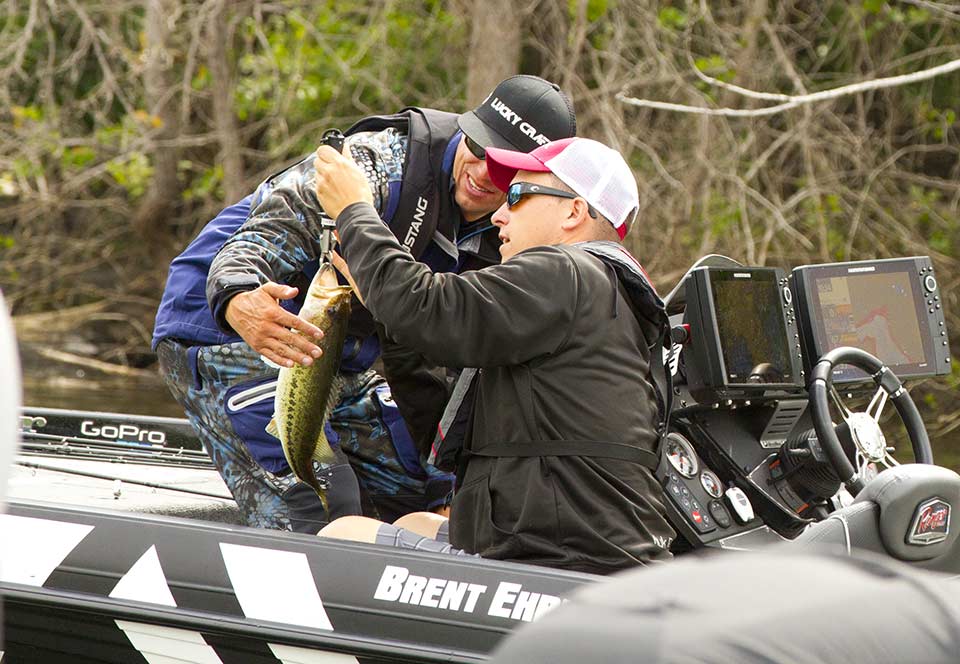
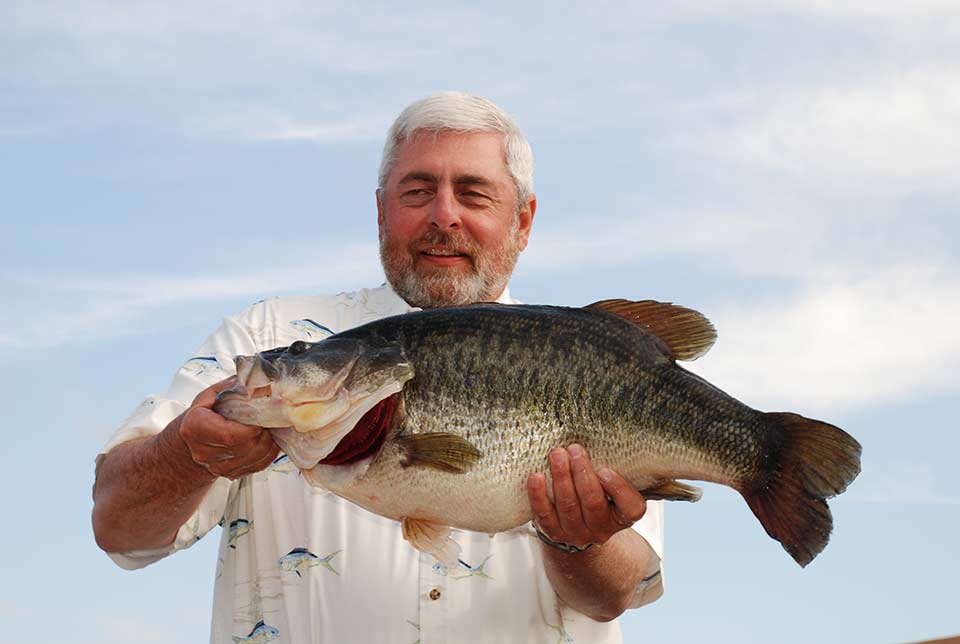
Show off your bass! Put a Largemouth Bass plate on your vehicle, trailer or motorcycle and help keep bass fishing BIG in Texas.
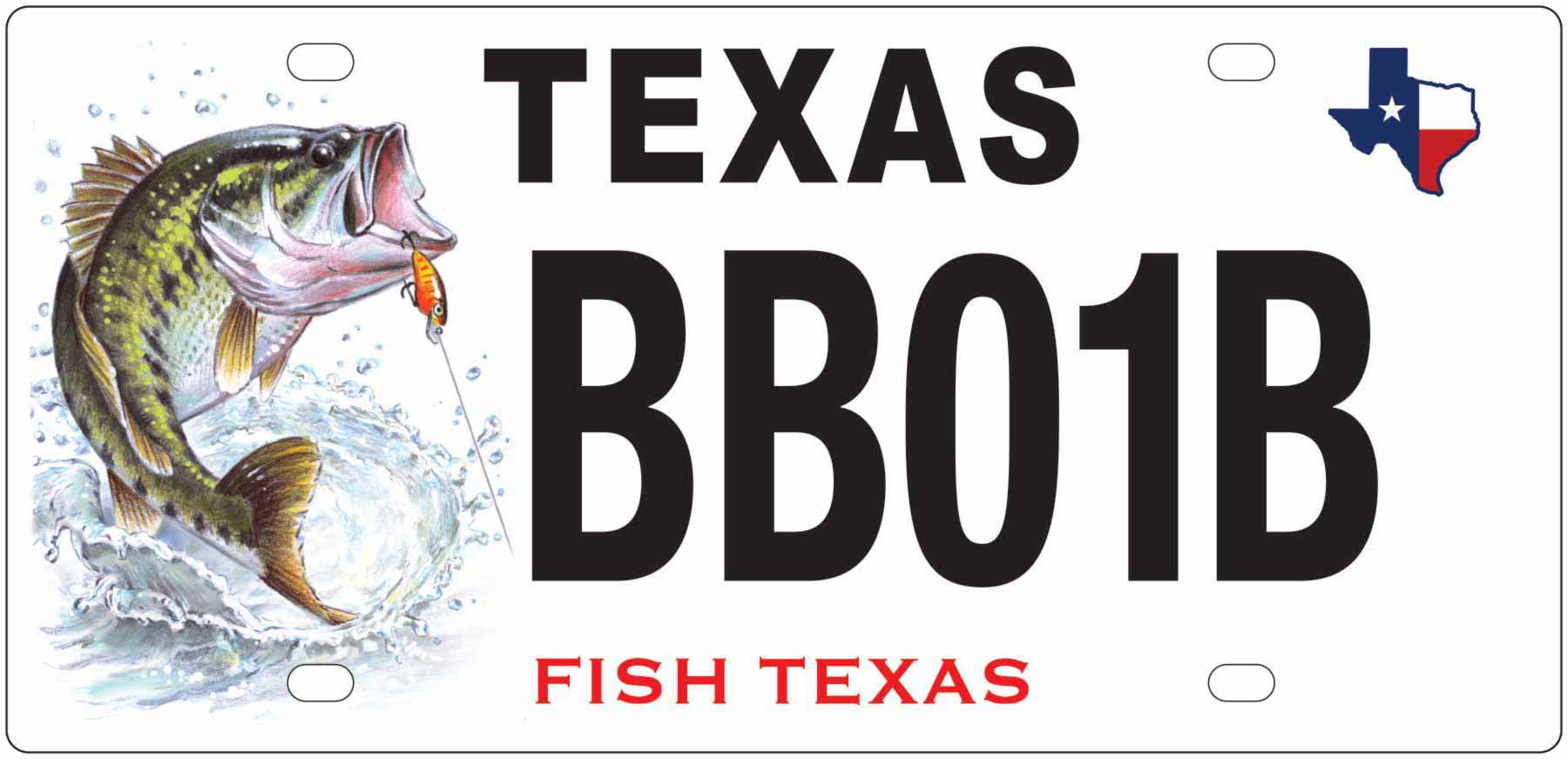
85% of Texans live in urban areas—some 18 million people—and most don't fish. "Neighborhood Fishing" aims to give Texans a good place to fish—close to where they live.
Texas Neighborhood Fishing is a new pilot program that will provide year round recreational fishing opportunities in major urban areas, emphasizing youth and family participation. Success of the program will rely upon an effective partnership between Texas Parks and Wildlife Department (TPWD), businesses, local governments, volunteers and users. This program is expected to increase participation in fishing (and outdoor recreation) while attracting more urban youth and families to public parks.
As part of the program, selected public park lakes will receive frequent stockings of catfish throughout the summer, and trout throughout the winter. Management of bass, sunfish or other existing species will provide further fishing opportunities throughout the year. Fishing-related information (how-to-fish, fish identification, etc.) will be available at each lake and “would-be” anglers will have access to basic fishing equipment at little or no charge. Businesses, organizations, and volunteers will be encouraged to sponsor and conduct fishing clinics for local youth and families, promote the program in the community, provide fishing instruction and aquatic education, and establish and maintain tackle loaner programs.
Currently the pilot phase is operating in 9 urban lakes; our goal is to eventually move into all urban centers.
This program seeks to attract families with children – especially those who have never (or rarely) fish. Households, in major urban centers, within a 15-20 minute drive of Neighborhood Fishing lakes are the primary target. In Texas urban areas, minority groups are often found in these neighborhoods.
Some 30,000 people participated in 2006—at 8 lakes in the pilot program.
Visit the TPWD Neighborhood Fishing Program web site for more information.
Do fish descended from Budweiser ShareLunkers grow bigger, faster, than fish without this trophy heritage? Will they reach a larger maximum size and result in a new state and/or world record?
Texas Parks and Wildlife Department Inland Fisheries biologists are currently conducting a research study to answer these and other questions as part of Operation World Record. Operation World Record (OWR) is an attempt to produce the next world record largemouth bass through a program of selective breeding using Budweiser ShareLunkers with pure Florida largemouth genes. Research to evaluate the growth rates of these selectively bred fish is ongoing.
This new research program is the first study of its kind and is being carried out on a scale never attempted before. Approximately 20,000 largemouth bass are raised to six-inch size each year, tagged, and then stocked into six public lakes. Fish are collected by electroshocking each year and the growth rate of OWR fish is compared to that of wild fish.
A tissue sample is taken from each ShareLunker and sent to Dijar Lutz-Carrillo at the A.E. Wood Fish Hatchery in San Marcos for analysis. Lutz-Carrillo has identified a number of genetic markers common to big bass. It is believed this is the first time this has been done. It is hoped that this information can be used in the future to identify fish with superior growth potential.
The Ducks Unlimited plate benefits wetlands habitat and a vast array of waterfowl.
Visit the Ducks Unlimited website for more information and to get your plate today!